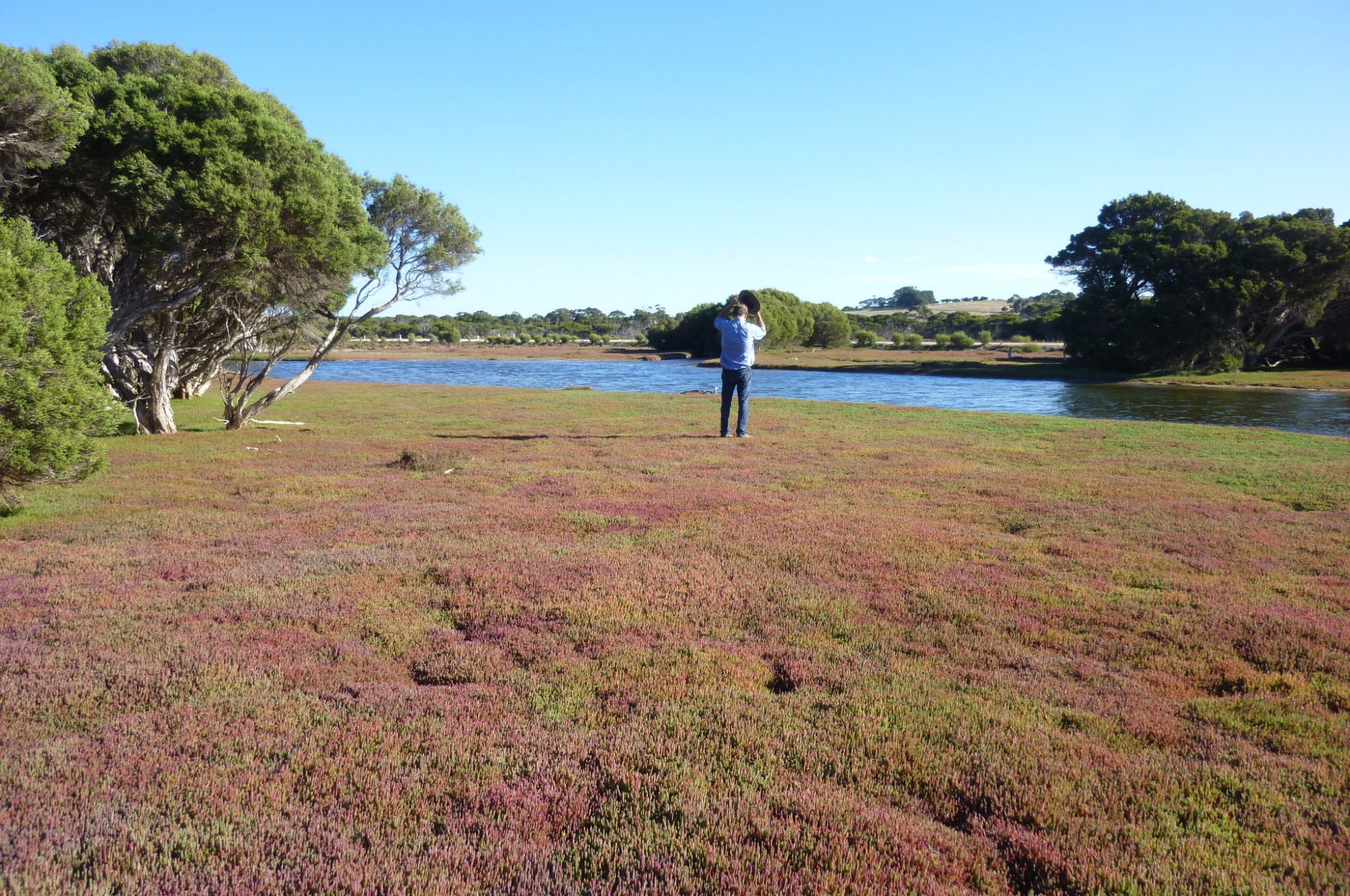
Nine Planets lies at the end of the Chapman River Sanctuary adjacent Lashmar’s Lagoon Sanctuary and about 600 meters from Antechamber Bay, one of the largest, most pristine and undisturbed beaches on Kangaroo Island’s coast.
The Chapman River teams with bream and the beach is a sanctuary for endangered hooded plovers which nest in the sand just above the high water line in late spring. Garfish, tommies, flathead and mullet can be caught from the beach if you are adept at shore fishing.
Lashmar’s Lagoon is a sanctuary for waterbirds and teems with black swans, ducks, pelicans, sacred ibis and other birds.
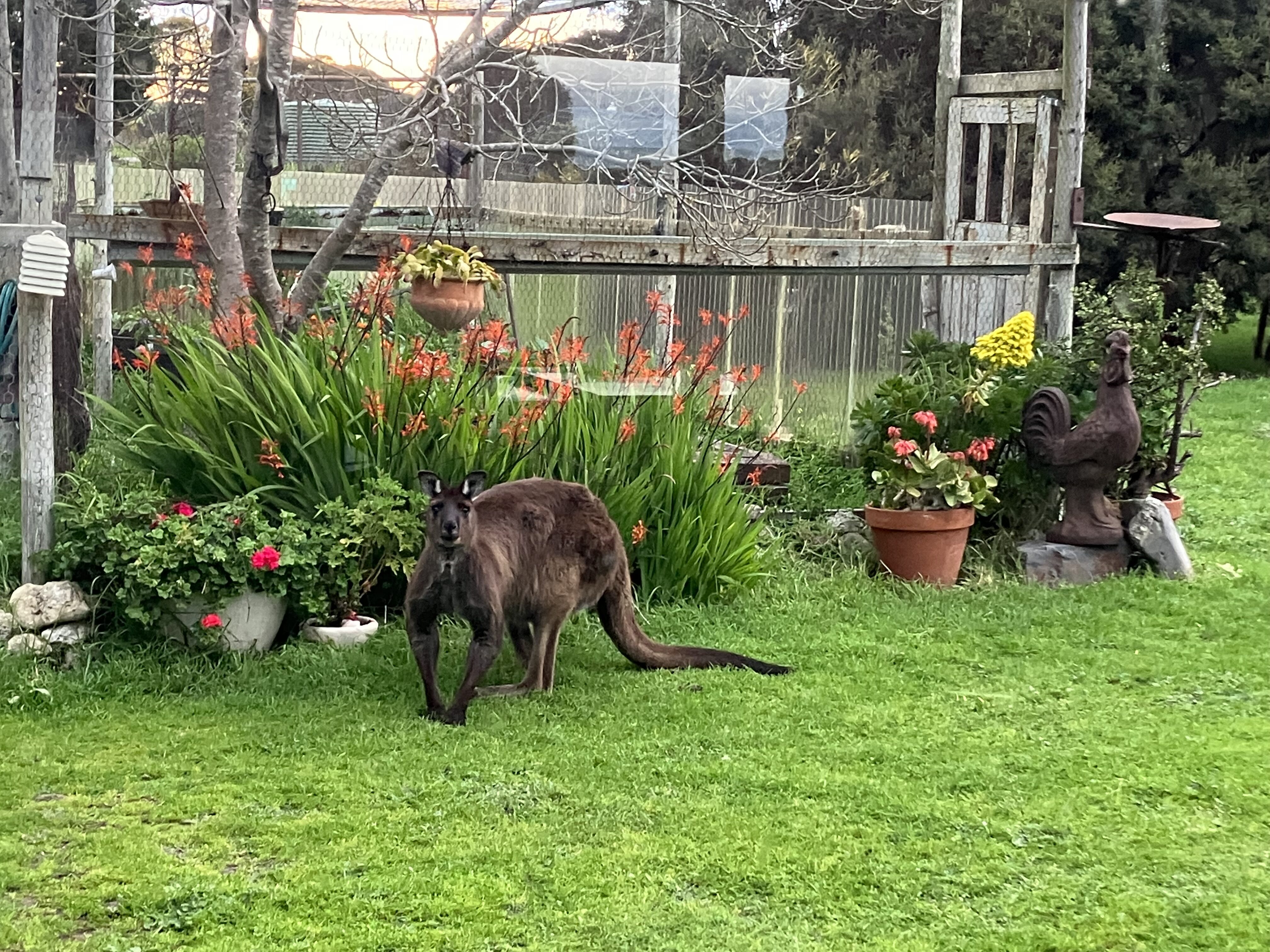
In winter and spring black swans grazing in pasture adjacent the lagoon outnumber farmers’ sheep. Kangaroos, wallabies and goannas usually visit daily and dozens of bird species including magpies, currawongs, superb fairywrens, honeyeaters, thornbills, red browed finches and silver eyes call in for a drink and/or bath, whilst wedge tailed eagles and the very rare white bellied sea eagle may be seen soaring overhead.
At night the calls of boobook owls can be heard in the distance. It is often windy, but rarely very hot or very cold.
Enjoy meeting new people from different part of world. We also learn from our Wwoofer having conversations over the dinner table.
Their help makes possible to live isolated large property.
Organic/Biological methods we use
No industrial chemicals, fertilisers, cleaners, herbicides or pesticides are used on the property. Almost all waste is recycled on site and all natural materials are returned to the earth through composting.
The acquisition of plastic is actively avoided and reduced as far as possible; plastic is reused, repurposed or recycled to the greatest extent practicable.
Energy is provided by the sun or our own timber except for a small amount of LPG used for cooking, although we also use wood and solar electricity for cooking.
One of our vehicles is a battery electric Nissan Leaf fuelled by free energy from the Sun. All household water is captured from building canopies and supplementary water for gardening is drawn from a shallow well.